Pet Insurance Options in New York: Coverage, Costs and Trade-offs


- Compare eight insurance providers and the Pet Assure non-insurance alternative using your New York quote. MetLife offers up to 90% reimbursement of covered expenses and a family plan for up to three pets. Wellness benefits and veterinary discounts are different from accident and illness insurance. Compare deductibles, limits, exclusions and current prices.
Pet insurance can help pay eligible veterinary costs after an unexpected injury or illness. You still need to budget for premiums, deductibles, your share of covered bills, excluded services and costs above policy limits.
For New York residents, the policy available in your ZIP code matters more than a national headline or starting price. This guide compares coverage features and questions to ask before buying. Routine care usually requires a separate wellness benefit or add-on.
Coverage information reviewed October 29, 2026. Request current quotes for the same pet, deductible, reimbursement rate and annual limit before comparing prices.
Pet Insurance Options in New York
- Lemonade — Optional coverage and preventive packages
- MetLife — Family plans for multiple pets
- Wagmo — Separate insurance and wellness products
- Fetch — Accident and illness coverage with optional wellness
- Odie — Online account and claim tools
- Pet Assure — A veterinary discount alternative, not insurance
- Spot — Accident-only and accident and illness options
- Nationwide — Dog, cat and eligible exotic-pet options
- Pumpkin — Eligible alternative therapies and other accident and illness benefits
Featured Provider


Lemonade: Optional Coverage and Preventive Packages

Lemonade offers accident and illness insurance with optional coverage for expenses such as vet-visit fees and physical therapy. Routine checkups and vaccines require an optional preventive package; they are not automatically included in the base insurance.
Preventive options can include dental cleaning and, for eligible puppies and kittens, spay/neuter procedures and microchipping. Review the benefit schedule and age requirements for the package you choose.
Quotes and claims are handled through Lemonade’s digital tools. Some eligible claims may be automated, but processing time varies and medical records can be required. Do not assume every claim is paid within minutes or that every breed and age has the same enrollment options.
Source: Lemonade coverage and disclosures.
| Reimbursement levels | 70%, 80% or 90% of covered costs, subject to the policy’s deductible calculation and limits. |
|---|---|
| Annual deductible | Choose from the options in your current quote; availability can vary by pet and state. |
| Annual benefit limit | Multiple choices, including limits up to $100,000 where offered. Confirm the state-specific quote. |
Lemonade discounts
Lemonade advertises savings for eligible policy bundles, multiple pets and annual payment. Availability and amounts depend on the state and policy. Compare the final quote after discounts, using the same coverage limits and deductible.
MetLife Pet Insurance: Family Plans for Multiple Pets
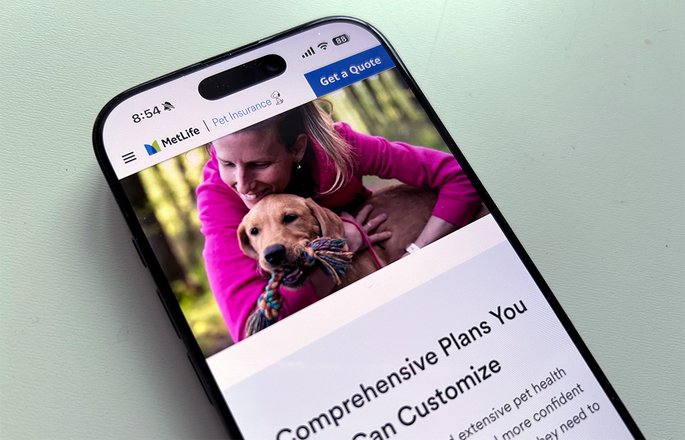
MetLife Pet Insurance offers accident and illness coverage with reimbursement of up to 90% of eligible veterinary expenses after the deductible, subject to policy limits and exclusions.
Its Family Plan can combine up to three dogs or cats on one policy. Pets share a deductible and annual benefit limit, so claims for one pet reduce the amount remaining for the others.
Routine care is available through an optional Preventive Care add-on. MetLife advertises no upper age or breed restrictions for enrollment, but available coverage, waiting periods and exclusions depend on the policy. Medical records may be needed when claims are reviewed.
Do not assume existing illnesses are covered: a limited transition benefit may apply to qualifying employer plans with prior insurance. Confirm eligibility before switching. An unlimited annual benefit option is available in some cases; it does not remove deductibles or exclusions.
Source: MetLife FAQs and policy disclosures, reviewed October 29, 2026.
| Reimbursement levels | Up to 90% of covered veterinary expenses after the deductible, subject to policy limits and terms. |
|---|---|
| Annual deductible options | $50–$500 in MetLife’s partner product information; confirm the options available in your quote. |
| Annual benefit limits | Multiple limits, including an unlimited option where available. MetLife’s direct website may list additional options. Options and terms vary by state and policy. Reviewed October 29, 2026. |
MetLife discounts in New York
Discounts depend on eligibility and state approval. MetLife’s military, veteran, first responder, healthcare worker and animal care discounts are not available in New York. Check your quote for any employer, affinity, online-purchase or multi-policy savings.
The Healthy Pet Incentive reduces the deductible by $50 after a policy year without a claim reimbursement, subject to restrictions. The deductible resets at renewal if a non-preventive-care claim has been reimbursed. This is one benefit, not two separate loyalty and claims-free discounts.
Source: MetLife discount terms.
Wagmo: Separate Insurance and Wellness Options

Wagmo offers accident and illness insurance and a separate Wellness membership. You can buy either product or both; their benefits and payment rules differ.
Insurance reimburses eligible accident and illness treatment according to the deductible, reimbursement rate and limits in the policy. Pre-existing conditions are excluded. Check the state-specific quote for current choices, waiting periods and any annual, incident or lifetime limits.
Wagmo Wellness reimburses listed routine services up to service and annual limits, with no deductible or waiting period. It does not pay for accident or illness treatment. The advertised 24-hour wellness claim-processing time is not a guarantee that insurance claims or bank deposits will arrive within a day.
Sources: Wagmo product differences and deductible guidance.
| Reimbursement | Insurance: the percentage selected in your quote, subject to policy terms. Wellness: eligible routine expenses up to scheduled benefit caps. |
|---|---|
| Deductible | Insurance: the deductible shown in your policy. Wellness: no deductible. |
| Benefit limits | Insurance limits depend on the policy issued. Wellness has service and annual limits and does not cover accident or illness treatment. |
Wagmo pricing and membership terms
Compare the current insurance quote and Wellness membership agreement separately. Confirm any discount, annual commitment, payment schedule and cancellation balance before enrolling; monthly billing does not necessarily mean a month-to-month membership.
Fetch: Accident and Illness Coverage with Optional Wellness


Fetch covers eligible accident and illness expenses, including sick-visit exam fees, dental illness and hereditary conditions, subject to policy terms. These benefits are not a promise that every vet bill or age-related condition will be paid.
Choose a reimbursement rate of 70%, 80% or 90%, an annual deductible and an annual payout limit from the options offered for your pet. Fetch’s published claim examples apply the reimbursement percentage before subtracting the remaining deductible.
Optional Fetch Wellness pays scheduled benefits for routine care. Wellness has no deductible or reimbursement percentage, but each benefit has an annual limit. Pre-existing conditions and breeding-related costs are not automatically covered by accident and illness insurance.
For New York, Fetch currently advertises no accident waiting period and an illness waiting period of up to 15 days. Confirm the policy’s effective date, exam and medical-record requirements before purchase.
Sources: Fetch New York coverage and reimbursement rules.
| Reimbursement levels | 70%, 80% or 90% for eligible accident and illness claims, subject to the deductible and annual limit. |
|---|---|
| Annual deductible | Select from the options shown in your current quote. |
| Annual benefit limit | Select from the options shown in your current quote. Optional Fetch Wellness has separate scheduled benefit caps. |
Fetch discounts
Check the current quote for any qualifying partner, employer or membership discount. Older promotions and claims-free savings are not guaranteed to be available to every applicant. Compare the total premium and renewal terms.
Odie: Online Tools and Coverage Options

Odie offers accident and illness insurance, accident-only options and separate routine-care benefits. Its online account tools let customers submit and track claims.
Coverage options differ by policy and underwriter. Vet exam fees, take-home prescriptions and rehabilitation may require supplemental coverage. Confirm that these benefits are included in your quote rather than assuming they are always excluded or always standard.
Waiting periods, dental-care requirements, deductibles and benefit limits vary by state and product. Odie’s current help center lists more than one product configuration; use the declarations and policy forms issued with your quote. Wellness benefits do not substitute for accident and illness insurance.
Source: Odie Help Center.
| Reimbursement levels | Depend on the Odie product and underwriter; current accident and illness configurations include 70% and 90%. |
|---|---|
| Annual deductible | Depends on the product; confirm the options and amount in your state-specific quote. |
| Annual benefit limits | Depend on the product; current configurations include $10,000 and $40,000. Routine-care benefits are separate. |
Odie discounts and fees
Confirm any multi-pet discount and billing fee in the current quote. A lower advertised starting price does not establish that Odie will be less expensive for your pet than another insurer.
Pet Assure: Veterinary Discounts and Optional Wellness Benefits

Pet Assure is a veterinary discount program, not accident and illness insurance. It provides a 25% discount on eligible in-house medical services at participating veterinarians. The discount can apply to eligible care for pre-existing conditions, but it does not reimburse the rest of your bill.
Exclusions include pharmaceuticals, take-home products, outside laboratory work and other outsourced services, grooming and boarding. Check that your regular and emergency clinics participate before enrolling.
Mint Wellness is a separate preventive-care reimbursement membership, not insurance. It pays for listed routine services up to plan limits. It does not cover treatment for accidents or illnesses. Compare its annual cost with the routine benefits you expect to use.
Source: Pet Assure and Mint Wellness FAQs.
| Pet Assure discount | 25% off eligible in-house medical services at participating veterinarians; service exclusions apply. This is not insurance. |
|---|---|
| Mint Wellness benefits | Reimbursement for listed preventive services up to the membership’s service and annual limits; not accident and illness insurance. |
| Deductibles and limits | No insurance deductible for these non-insurance products. A discount or wellness membership does not cover the full cost of accidents and illnesses. |
How Pet Assure savings work
Show your membership information at a participating practice for the eligible discount. There is no insurance deductible or claim to file for that discount. Mint Wellness reimbursement follows its separate schedule of benefits. Neither product makes all veterinary care free, and the discount cannot be combined with other clinic discounts or packages.
Spot: Accident-Only and Accident and Illness Options

Spot offers accident-only and accident and illness plans. Accident-only coverage does not cover illnesses, even when illness treatment is an emergency.
Accident and illness coverage can include eligible exam fees, dental illness, hereditary conditions and treatment for behavioral problems. Prescription food, supplements and alternative therapies must meet the policy’s medical-necessity and coverage rules.
Optional Gold and Platinum preventive benefits pay scheduled amounts for listed routine services. Dental cleaning and spay/neuter benefits depend on the tier. These benefits do not mean the insurer pays every routine bill in full.
Select your annual deductible, reimbursement percentage and annual limit, including an unlimited option where offered. Waiting periods and curable-condition rules depend on the state-specific policy.
Sources: Spot sample policies and benefit disclosures.
| Reimbursement Levels | 70%, 80%, 90% |
|---|---|
| Deductible Options | $100, $250, $500, $750, $1,000 |
| Maximum Coverage Limits | $2,500, $3,000, $4,000, $5,000, $7,000, $10,000, to unlimited |
Spot discounts
Spot advertises a 10% multi-pet discount for additional pets. Other partner or employer offers may be available, subject to eligibility and state rules. Check the quote; do not assume an older gift-card promotion is still active.
Nationwide: Options for Dogs, Cats and Exotic Pets

Nationwide offers dog and cat insurance and coverage for eligible birds and exotic pets. Species eligibility and availability vary; owning insurance does not override local restrictions on keeping an animal.
Its products use different reimbursement methods. Major Medical pays according to a schedule of defined benefits per condition, after its deductible. It is not unlimited reimbursement of the actual veterinary bill. Other products, including Modular plans where offered, use selected coverage categories, limits and reimbursement percentages.
Check the exact plan for hereditary or congenital conditions, cruciate ligament treatment, wellness benefits and waiting periods. A benefit included in one Nationwide plan may be an optional rider or excluded in another. The current quote determines enrollment eligibility and deductible choices.
Sources: Nationwide products, FAQs and bird coverage.
| Reimbursement method | Varies by plan. Major Medical uses defined benefits per condition; other plans may reimburse a selected percentage of eligible expenses. |
|---|---|
| Annual deductible | Varies by product. Major Medical lists $250; other plans may offer different choices. |
| Benefit limits | Use the exact plan’s benefit schedule and annual limits. Major Medical is not unlimited reimbursement of the actual vet bill. |
Nationwide discounts
Ask about current multi-pet, existing-customer and employer-program savings. Eligibility, amounts and product availability vary. Compare the benefit schedule or coverage limits as well as the discounted premium.
Pumpkin: Coverage for Eligible Treatments and Therapies

Pumpkin offers accident and illness plans with 80% or 90% reimbursement of covered costs after the annual deductible, up to the selected annual limit. Current options include an unlimited annual limit where available.
Eligible benefits can include exam fees, dental illness, hereditary conditions, behavioral treatment and medically necessary alternative therapies. These remain subject to exclusions; the policy does not promise payment for every preventable illness or every treatment a veterinarian recommends.
Pumpkin accepts pets from eight weeks old and advertises no upper age or breed restrictions. Waiting periods vary by state and can be 14 days or less. Some cured conditions may become eligible under specific rules; chronic pre-existing conditions are not automatically covered.
Preventive Essentials and Pumpkin Wellness Club are separate non-insurance products with their own service limits and availability. They should not be confused with the insurance reimbursement rate.
Sources: Pumpkin FAQs and current plan disclosures.
| Reimbursement levels | 80% or 90% of covered expenses after the annual deductible, up to the selected annual limit. |
|---|---|
| Annual deductible | Choose from the options available in your current state-specific quote. |
| Annual benefit limits | Dogs: $5,000, $10,000, $20,000 or unlimited; cats: $5,000, $7,000, $15,000 or unlimited, where available. |
Pumpkin discounts
Pumpkin advertises a 10% insurance discount for each additional pet enrolled. Discounts and availability can vary; confirm the final quote and separate wellness-membership cost.
What Is Pet Insurance in New York?
Pet insurance is a property and casualty insurance product that helps pay eligible veterinary expenses. Most plans reimburse you after you pay the veterinarian and submit a claim. Direct veterinary payment may be available with some providers and clinics, but must be arranged; it is not a guarantee that you can avoid paying upfront.
Accident and illness insurance, preventive-care memberships and veterinary discount programs are different products. Compare their exclusions and payment limits before deciding what meets your needs.
| Quote item | What to compare | Why it matters |
|---|---|---|
| Pet profile | Same species, breed and age | Different pets produce different prices. |
| Location | Your current New York ZIP code | Prices and products vary by location. |
| Coverage type | Accident-only or accident and illness | Illnesses are excluded from accident-only plans. |
| Deductible | Amount and annual/per-condition basis | Changes your out-of-pocket cost. |
| Reimbursement | Percentage and calculation order | The same percentage can produce different payouts. |
| Benefit limit | Annual and any condition/incident caps | Limits can leave a larger unpaid balance. |
| Add-ons | Exam fees, therapy and routine care | A lower base price may omit benefits. |
| Discounts and fees | Final billed amount and renewal terms | Promotions may be limited or temporary. |
| Exclusions | Pre-existing, dental and orthopedic rules | These determine whether a claim qualifies. |
Use the checklist above to compare current quotes for the same pet and coverage. For historical context, NAPHIA reported 2024 U.S. average accident and illness premiums of $62.44 per month for dogs and $32.21 for cats. These are historical national averages, not New York quotes or 2026 prices.
Source: NAPHIA 2025 report of 2024 premiums.
Which Types of Pet Coverage Can You Buy?
Accident-only insurance
Helps pay eligible treatment for injuries such as fractures or swallowed objects. It does not cover illnesses. Exclusions, waiting periods and limits still apply.
Accident and illness insurance
Adds eligible illness treatment to accident coverage. Check whether exam fees, dental illness, hereditary conditions, prescriptions and rehabilitation are included or require an add-on. An accident and illness policy already includes both categories; you do not need a second accident-only policy to make it complete.
Wellness and preventive care
Optional benefits or separate memberships help budget for listed routine services, such as exams and vaccines. Service caps and eligibility vary. Not every wellness product is insurance, and buying wellness benefits does not eliminate accident and illness exclusions.
What Is Usually Excluded?
Pre-existing conditions generally are excluded. Symptoms before enrollment or during a waiting period can count even without a formal diagnosis. Some policies reconsider specified cured conditions after a symptom- and treatment-free period; chronic conditions and knee or ligament problems may remain excluded. A pet with an excluded condition may still be insured for unrelated eligible conditions.
Breed predisposition does not automatically make a pet or every hereditary condition ineligible. Read the actual hereditary, congenital and bilateral-condition provisions. Age restrictions also vary; several insurers accept older pets, although prices and coverage choices may differ.
Cosmetic procedures, breeding costs and routine care are commonly excluded from base insurance. Medically necessary treatment may be treated differently from elective services. Do not assume all policies exclude or cover the same procedure.
How Much Does Pet Insurance Cost in New York?
Premiums depend on the pet, location, insurer and coverage selected. Obtain quotes with matching deductibles, reimbursement percentages, annual limits and add-ons. National averages and advertised starting prices do not establish your cost. Premiums may change at renewal.
How Claims and Deductibles Work
Most policies let you use any licensed veterinarian within their covered territory. You usually pay the bill, submit the itemized invoice and medical records, and receive payment for approved covered costs. Claim-processing and bank-transfer times vary.
An annual deductible is satisfied once per policy year, not again at every visit or claim. Some products use per-condition or per-incident deductibles instead. Confirm which applies and whether multiple pets share a deductible.
For a hypothetical $1,000 bill consisting entirely of eligible expenses, 80% reimbursement pays $800 if the deductible has already been met and sufficient benefits remain. With a $250 remaining deductible, a policy that subtracts the deductible first would pay ($1,000 − $250) × 80% = $600. A policy that applies reimbursement first would pay ($1,000 × 80%) − $250 = $550. Your contract controls the calculation.
Limits, Waiting Periods and Out-of-Pocket Costs
Annual, per-condition, per-incident or lifetime limits may cap payments. An unlimited annual limit does not remove exclusions, deductibles or your share of covered bills. Even a 100% reimbursement option, if offered, applies only to eligible expenses under the contract.
Waiting periods differ for accidents, illnesses and orthopedic conditions and can vary by state. A policy’s effective date is not necessarily the date every benefit begins. Check any examination waiver requirements and avoid gaps when switching policies; a condition covered by your old policy may be pre-existing under a new one.
Sources: Embrace deductible explanation, Fetch claim examples and the provider policy disclosures linked above.
Our Methodology
This guide compares the listed providers’ published coverage features, optional benefits and policy restrictions. Information was reviewed against insurer and program-provider materials on October 29, 2026. MetLife’s partner materials and direct website list different deductible choices; the table identifies the partner range and asks readers to confirm the actual quote.
This review is not a new statewide premium survey, a guarantee of eligibility or a promise of claim payment. Historical price data are labeled by observation year. The best fit depends on the pet, the state-specific contract and the household’s ability to pay deductibles and uncovered costs. Read the policy documents before enrolling.
Frequently Asked Questions
- Selection Criteria: Companies are chosen based on customer service, affordability, and coverage diversity.
- Data Collection: Data is amassed from credible sources, customer surveys, and industry reports.
- Analysis: A robust analysis, employing a scoring system, is conducted to rank the companies.
- Updating: This page is regularly updated to offer the most current information.
- Editorial Integrity: We uphold a transparent editorial process and disclose any affiliations.
- User Engagement: User feedback is integral and factored into our evaluations.
- Accessibility and Usability: Our page is crafted for ease of use, mobile optimization, and wide accessibility.
- Editorial Independence: Our editors and writers work independently, free from influence by advertisers.
- Source Disclosure: All data sources are disclosed and credited.
- Conflict of Interest: Any potential conflict of interest is disclosed to maintain integrity.
- Reviewer Qualifications: The qualifications of reviewers and contributors are provided.
- Update Frequency: The frequency of updates and revisions is clearly stated.
- Correction Policy: A clear policy for correcting errors is in place to uphold accuracy and trust.