Renters Insurance Claims Cost Calculator

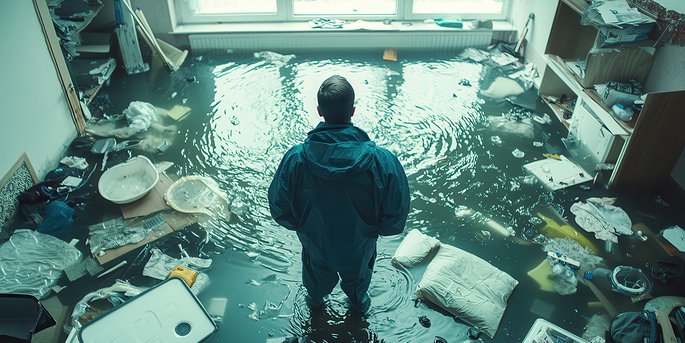
Renters insurance is supposed to be a financial safety net. It’s designed to cover losses from theft, fire, and other damages and to pay for temporary housing if your rental becomes unlivable. But how much will your policy actually pay out if you file a claim? And how much will you need to cover yourself?
Use this renters insurance calculator to estimate your potential claim payout, factoring in your coverage limits, deductible, and depreciation. Then, keep reading to understand what these numbers mean—and where you might be left paying out of pocket.
Renters Insurance Claims Cost Calculator
Compare Renters Insurance Companies




What Renters Insurance Covers—and What It Doesn’t
A standard renters insurance policy covers three main areas:
- Personal property: Compensation for belongings damaged or stolen due to covered events, like fire, theft, or certain types of water damage.
- Liability protection: Pays if you accidentally cause damage to someone else’s property or if a visitor is injured in your rental.
- Additional living expenses (ALE): Covers temporary housing, food, and other expenses if your rental becomes uninhabitable.
On paper, this sounds like comprehensive protection. In practice, however, the actual payout depends on several factors, including policy limits, the deductible you choose, and whether your belongings are valued based on actual cash value (ACV) or replacement cost value (RCV).
How Much Coverage Do You Have? Check Your Policy Limits
When purchasing renters insurance, you select a coverage limit for personal property—the maximum amount your insurer will pay if everything is lost. These limits typically range from $10,000 to $50,000 or more, depending on the value of your belongings.
For a rough estimate of how much coverage you need, add up the cost of replacing major items in your home:
- Electronics (laptops, phones, TVs, gaming consoles)
- Furniture (sofas, beds, tables, chairs)
- Clothing and shoes
- Kitchenware and appliances
A single-bedroom apartment’s contents often total $30,000 to $40,000, while a fully furnished two-bedroom rental can easily surpass $50,000. If your policy limit is lower than the value of your belongings, you won’t be fully reimbursed in a total loss scenario.
Your Deductible Affects Your Payout More Than You Think
The deductible is the amount you must pay before your insurance kicks in. A lower deductible—$500 to $1,000—means paying less out of pocket when filing a claim but comes with slightly higher monthly premiums. A higher deductible—$2,500 or more—lowers your premiums but leaves you covering a greater share of any loss.
How Deductibles Work in Practice
Say a fire destroys $10,000 worth of belongings. With a $1,000 deductible, your insurer would cover $9,000. If your deductible is $2,500, your payout shrinks to $7,500.
For small claims, a high deductible might mean insurance doesn’t help at all. If a burglary results in a $1,200 loss and your deductible is $1,000, your policy would only pay $200.
Depreciation Can Reduce Your Claim Payout
The age and condition of your belongings significantly affect the amount of money you receive. Many policies reimburse items based on their actual cash value (ACV), meaning depreciation is deducted from the payout.
- Laptops and phones lose 20-30% of their value per year. A three-year-old laptop bought for $1,500 might only be valued at $600 to $900 in a claim.
- Furniture depreciates more slowly, at 5-10% per year. After three years, a $1,000 couch might be worth $700.
Some policies offer replacement cost value (RCV), which covers the cost of buying a new item rather than the depreciated value. These policies cost more but result in higher claim payouts.
Liability Coverage: The Hidden Protection in Your Policy
Most renters insurance policies include $100,000 to $300,000 in liability coverage. This protects against legal claims if someone is injured in your rental or if you accidentally cause property damage.
- If a guest trips on a loose rug and sues for $50,000 in medical bills, your policy would cover it—assuming your liability limit is high enough.
- If a fire spreads to a neighboring apartment and causes $100,000 in damage, but your liability limit is $50,000, you’d be responsible for the remaining $50,000.
For renters who frequently host guests, increasing liability coverage can provide an extra layer of protection.
Temporary Housing: Will Your Policy Cover Hotel Stays and Meals?
If a fire, flood, or other covered event forces you out of your rental, Additional Living Expenses (ALE) coverage reimburses you for temporary housing and food. Policies typically offer $10,000 to $20,000 in ALE coverage, but in expensive cities, that may not last long.
Consider the costs:
- A mid-range hotel in New York City costs $250 per night. A two-week stay could total $3,500 before meals and transportation.
- Short-term rentals through platforms like Airbnb often cost $200 to $400 per night in urban areas.
- Restaurant meals and transportation costs add up quickly—potentially $50 to $100 per day.
If your ALE coverage is too low, you could run out of funds before repairs are completed, forcing you to cover remaining costs yourself.
Case Study: A $10,000 Water Damage Claim
Consider a renter with a $30,000 personal property limit, a $1,000 deductible, and ACV coverage. A burst pipe floods their apartment, destroying $10,000 worth of belongings. Here’s how the claim would break down:
- Depreciation: If belongings lose 10% of their value per year, a three-year-old TV, laptop, and furniture set worth $10,000 new might be valued at $7,000 today.
- Deductible: The first $1,000 is the renter’s responsibility.
- Final Payout: The insurer pays $6,000—not the original $10,000 claim.
With RCV coverage, the full $10,000 replacement cost would have been paid, minus the $1,000 deductible.
The Bottom Line: Understanding Your Policy Before Disaster Strikes
Renters insurance is affordable, but policy details can dramatically affect what’s covered in a claim. Many renters assume their coverage is enough—only to find out too late that depreciation, deductibles, and coverage limits reduce their expected payout.
Before disaster strikes, take a closer look at your policy:
- Is your coverage limit high enough to replace everything you own?
- Can you comfortably afford your deductible in case of a claim?
- Does your policy cover replacement cost value, or will depreciation lower your payout?
- Is your liability coverage high enough to protect against lawsuits?
The renters insurance calculator provides a starting point, but a careful review of your policy ensures you’re not caught off guard. When disaster hits, the last thing you want to discover is that you’re underinsured.
Frequently Asked Questions